

Why Are Gooseneck Trailers Easier to Back Up?
If you ask anyone who routinely hauls heavy equipment, dump loads, or livestock, they will almost always tell you the same thing: backing up a gooseneck trailer is vastly easier than backing up a conventional bumper pull.
If you’ve only ever backed up a standard utility or camper trailer, this might sound counterintuitive. Goosenecks are often much longer and heavier.
However, the secret isn’t the size of the trailer—it’s the location of the pivot point. Here is the breakdown of the physics and mechanics that make a gooseneck trailer a dream to maneuver in reverse.
1. The Pivot Point Sits Over the Axle, Not Behind It
The single biggest reason a gooseneck is easier to back up comes down to where the trailer connects to your truck.
- Bumper Pull: Connects 3 to 4 feet behind your truck’s rear axle.
- Gooseneck: Connects directly over (or slightly ahead of) your truck’s rear axle inside the bed.
When you turn your steering wheel to back up a bumper pull, your truck’s rear bumper swings in the opposite direction first. This creates an extreme lever effect that forces the trailer to react violently to even tiny steering inputs.
With a gooseneck, because the trailer pivots directly on top of the axle, the trailer tracks smoothly with the movement of the truck’s rear tires. There is no “bumper overhang” acting as a secondary lever, which means the trailer responds predictably and progressively.
2. Slower, More Forgiving Reaction Time
Because of that bumper overhang lever effect, bumper pull trailers are notoriously twitchy. Turn the steering wheel a fraction of an inch too far, and a bumper pull will quickly over-rotate, forcing you to pull forward and straighten out.
A gooseneck reacts much more slowly and predictably to your steering adjustments.
The Delay Benefit: This slower reaction time gives you a massive buffer. If you make a mistake or over-steer while backing into a tight barn door or job site slot, you have plenty of time to see it happening in your side mirrors and correct your path before the trailer gets away from you.
3. An Incredible 90-Degree Turning Radius
If you get a bumper pull trailer into too sharp of an angle while backing up, the tongue of the trailer will slam right into your truck’s rear bumper or corner panel. You are physically limited by how sharp you can jackknife the setup.
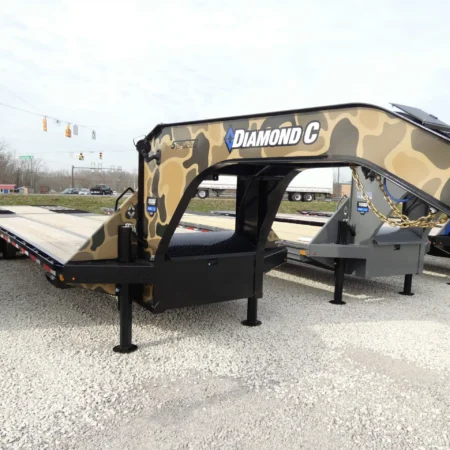
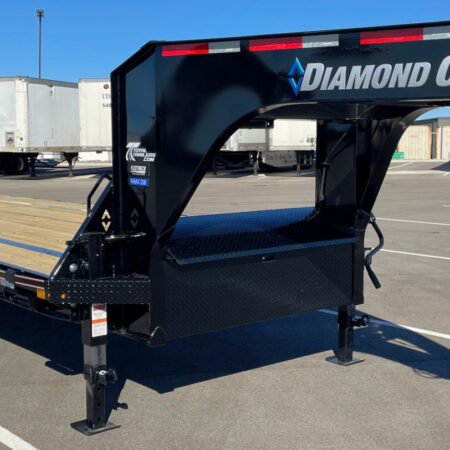
Because a gooseneck neck arches up and over your tailgate, there is no frame at bumper height to collide with. You can back a gooseneck up at a strict 90-degree angle to your truck without damaging either vehicle. This allows you to pivot the trailer on a dime, swinging the rear end into tight loading docks or parking stalls that a bumper pull could simply never reach.
The One Catch: It Takes More Room to Start the Turn
While goosenecks are far more predictable and offer sharper angles, they do require one minor adjustment if you’re used to a bumper pull: they take longer to start turning.
Because the pivot point is over the axle, you have to drive a bit further past your parking spot before you start cutting the wheel to initiate the back-up process. But once that turn is initiated, keeping it on a straight, controlled line is significantly less stressful.
The Bottom Line
Gooseneck trailers are easier to back up because their design eliminates the twitchy leverage of a rear hitch. They give you more time to correct your mistakes, stay perfectly stable in tight turns, and offer a radically superior turning radius.
